HIV Awareness and Screening Outreach
Strengthening community-level HIV prevention and early detection through education, free screening, and counseling services at Guzape Village, Abuja.
HIV Awareness and Screening Outreach
Strengthening Community-Level HIV Prevention and Early Detection
Background
Human Immunodeficiency Virus (HIV) remains a major global public health challenge. According to UNAIDS, approximately 39 million people were living with HIV globally as of 2023, with Sub-Saharan Africa accounting for nearly two-thirds of the global burden. Despite significant advances in antiretroviral therapy (ART) and prevention strategies, gaps persist in awareness, early diagnosis, and linkage to care, particularly in underserved communities.
HIV continues to disproportionately affect young adults and vulnerable populations, with late presentation contributing significantly to morbidity, mortality, and ongoing transmission. Community-based screening and education remain critical pillars in achieving global targets such as the UNAIDS 95-95-95 goals.
Event Details
Date & Location
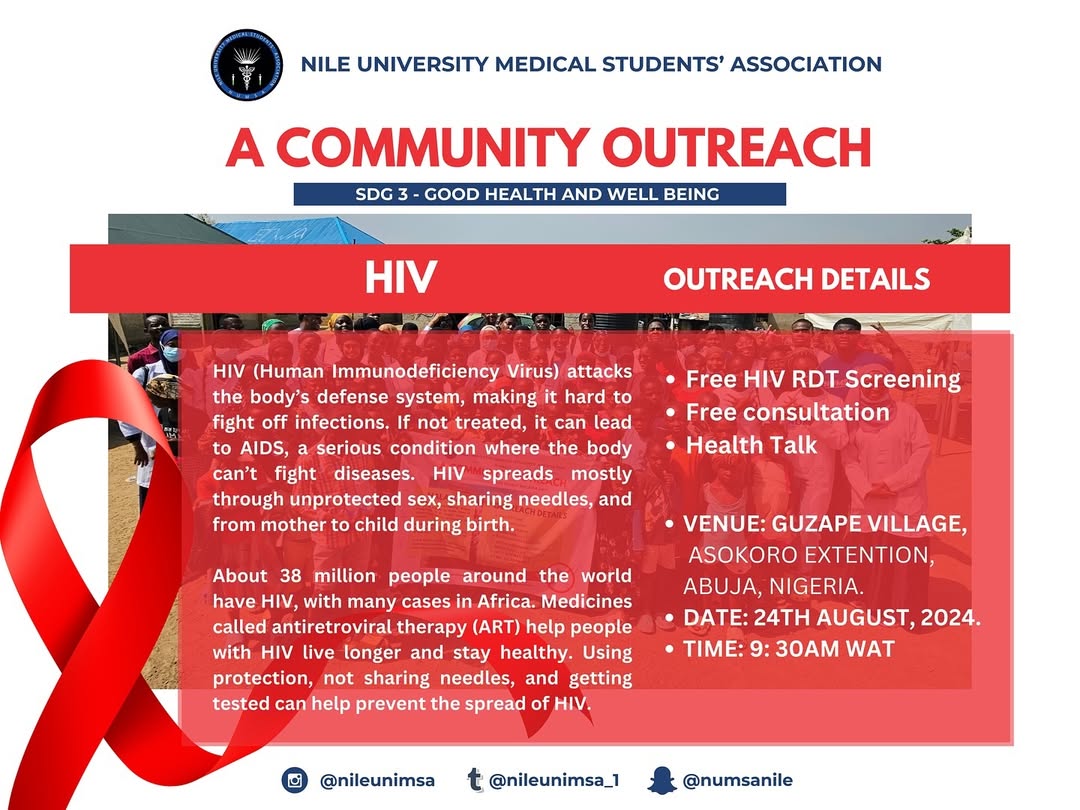
August 24, 2024 | Guzape Village, Asokoro Extension, Abuja, Nigeria
Time
9:30 AM WAT
SDG Alignment
SDG 3 - Good Health and Well-Being
Purpose and Scope
The HIV Awareness and Screening Outreach was designed to:
- Increase public awareness about HIV transmission, prevention, and treatment
- Reduce stigma and misconceptions surrounding HIV testing
- Promote voluntary counseling and testing (VCT)
- Facilitate early detection and referral for confirmatory testing and care
- Strengthen community engagement in preventive health practices
The initiative focused on delivering accurate health education, free screening services, and counseling directly at the community level to improve uptake and accessibility.
Program Overview
The outreach was conducted at Guzape Village, Abuja, through a collaborative effort involving medical students and healthcare professionals. Activities were implemented in line with national and WHO-recommended HIV testing and counseling protocols.
Services Offered
- Free HIV RDT Screening - Rapid diagnostic testing for early detection
- Free Consultation - One-on-one health consultations with medical professionals
- Health Talk - Comprehensive education sessions on HIV prevention and management
Program Components
- Community mobilization and sensitization
- On-site HIV education sessions
- Free rapid HIV screening
- Pre-test and post-test counseling
- Referral pathways for further evaluation and care where necessary
Key Highlights
Health Education
Community members received structured education on:
- Modes of HIV transmission - Understanding how HIV spreads and how to prevent it
- Prevention strategies - Safe sexual practices, testing, treatment as prevention
- Importance of early diagnosis - Benefits of early detection and adherence to treatment
- Addressing myths and stigma - Dispelling misconceptions associated with HIV
Screening Services
A total of 100 individuals were voluntarily screened using rapid HIV diagnostic tests. Screening was conducted confidentially and efficiently to encourage participation and reduce barriers to testing.
Counseling and Referral
All participants received appropriate pre-test and post-test counseling. Individuals requiring further evaluation were guided on referral pathways to accredited health facilities for comprehensive care and support.
Preventive Measures Emphasized
- Regular HIV testing as part of routine healthcare
- Reduction of high-risk behaviors through informed decision-making
- Early linkage to care to reduce disease progression and transmission
- Community responsibility in supporting stigma-free healthcare access
Outcomes
The outreach contributed to:
- Improved community awareness of HIV prevention and management
- Increased uptake of voluntary HIV testing - 100 individuals screened
- Reduction of testing-related stigma through education and engagement
- Strengthening of community trust in preventive health interventions
By bringing services directly to the community, the program supported early detection efforts and reinforced public health strategies aimed at reducing HIV-related morbidity and transmission.
Public Health Significance
Community-based HIV outreach programs play a critical role in:
- Bridging gaps in access to healthcare - Bringing services to underserved communities
- Supporting national HIV control strategies - Contributing to national health goals
- Advancing Sustainable Development Goal (SDG) 3 - Good Health and Well-Being
Such initiatives complement facility-based services and are essential in achieving long-term epidemic control and working towards the global goal of ending HIV as a public health threat.
Understanding HIV
HIV (Human Immunodeficiency Virus) attacks the body’s defense system, making it hard to fight off infections. If not treated, it can lead to AIDS (Acquired Immunodeficiency Syndrome), a serious condition where the body can’t fight diseases.
Transmission
HIV spreads mostly through:
- Unprotected sexual contact
- Sharing needles or syringes
- From mother to child during pregnancy, birth, or breastfeeding
Treatment and Prevention
- Medicines called antiretroviral therapy (ART) help people with HIV live longer and stay healthy
- Using protection, not sharing needles, and getting tested can help prevent the spread of HIV
- Early diagnosis and treatment are crucial for better health outcomes
Media & Resources
📱 Follow the Event
Conclusion
The HIV Awareness and Screening Outreach demonstrated the effectiveness of community-centered preventive healthcare in addressing communicable diseases. Sustained education, accessible testing, and strong referral systems remain indispensable tools in the global effort to end HIV as a public health threat.
This initiative reflects NUMSA’s commitment to:
- Public health advocacy at the community level
- Evidence-based interventions aligned with global health standards
- Reducing health disparities through accessible services
- Supporting national and global health goals including SDG 3 and UNAIDS targets
As future healthcare professionals, we recognize our responsibility to contribute to HIV prevention, early detection, and care. Through continued community engagement and collaboration with health stakeholders, we can work towards a future where HIV is no longer a public health threat.
Credits
Event: HIV Awareness and Screening Outreach
Date: August 24, 2024
Venue: Guzape Village, Asokoro Extension, Abuja, Nigeria
Organizer: Nile University Medical Students’ Association (NUMSA)
Services Provided: Free HIV RDT Screening, Free Consultation, Health Talk
Participants Screened: 100 individuals
SDG Alignment: SDG 3 - Good Health and Well-Being
Conducted by the Emmanuel Oranwusi (President) and Abdul-Azeez O. Ibrahim (Speaker) led 2023/24 NUMSA Administration.